+34 934 356 489
  bcn@avisualstudios.es

chroma
Proper lighting for chroma key

Now that you know everything you need to know about shooting on chroma and decide to get started, we give you the fundamental tips on lighting for chroma key and obtaining the best results.
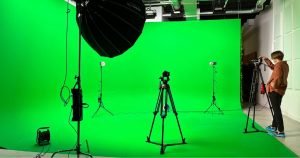
Start by lighting the chroma background
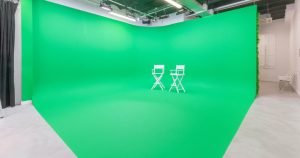
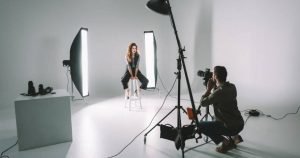
As we told you in the previous article, a chroma background can be green or blue, but it’s preferable to choose green since camera sensors are more sensitive to this color. This is because per se, the green color has greater luminosity. That said, regardless of the color you choose, it’s essential that your chroma background is absolutely flat and uniform to avoid shadows that don’t allow for correct image change in post-production. That’s why, although there are options for fabric, paper, or wall backgrounds, the latter ensures the greatest homogeneity since, for example, fabric or paper can wrinkle. Once you have chosen the background based on the mentioned characteristics, it’s time to choose the lighting equipment for chroma key. It’s essential that you opt for diffused light sources that are bicolor fluorescent or LED. In the case of LED, it also doesn’t generate heat and consumes less than other light sources. Another essential tip is that the equipment you choose should have high CRI and TLCI (+90) and, if you have the chance, place black flags behind the equipment to prevent light from contaminating the subject.

Once you have your equipment set up and placed on set, we recommend using exposure measurement tools to ensure uniformity of light on the background. The most reliable is the light meter, but you can also use others that might be available to you such as the histogram, zebra pattern, or false color.
Now illuminate the subject
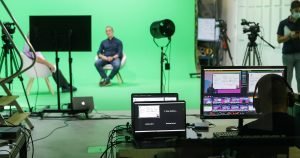
When you position the subject, you must keep in mind that they should be at a distance from the background of at least two meters. This is essential to prevent light that may reflect on the background itself from contaminating the subject and causing cutting problems in the post-production phase. The configuration and position of the chroma lighting equipment will depend on the final result you want to obtain in post-production; the direction of light, intensity, contrast between lights and shadows, color temperature, dominant colors or light mixtures, whether the subject is indoors or outdoors… Lastly, avoid having objects in the frame that can reflect light such as glass or metal, as you could have cutting problems in the editing phase, and ensure that the subjects don’t wear clothes of the same color as your chroma background.
Now that you know how to properly light a chroma, at AVisual STUDIOS you’ll have the peace of mind of having all these aspects controlled with our Chroma studio perfectly configured with diffused LED lighting in suspension included in the rental price. https://www.youtube.com/watch?v=RYjKR9x-TMw&feature=emb_logo