+34 934 356 489
  bcn@avisualstudios.es

Tutorials
How is the film clapperboard used?

This element, essential in any filming, has always accompanied us in the history of cinema. However, the most important thing is that you know how to use a film clapperboard correctly.
What is a film clapperboard?
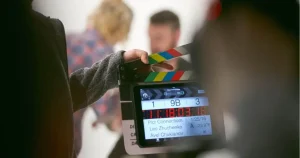
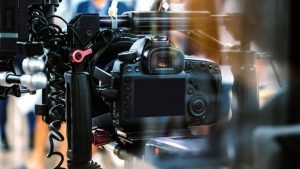
Before getting into how the film clapperboard is used, we must know what it exactly is. This visual aid is essentially a board where certain data is recorded to keep an order of the takes that are filmed, and later, this data will be essential in the post-production phase also for the synchronization of audio and image. In professional productions, audio and video are recorded separately to ensure higher quality of both sources. The audio that can be recorded by a camera’s integrated system cannot be compared to a dedicated audio recording system. So we will have two separate files for each take of each sequence that will need to be synchronized later. That’s why, in addition to being a visual aid, they are also used for audio synchronization thanks to the “clap” generated by the strike of the clapperboard’s mobile slate. This strike is short and strong enough to quickly identify it in the audio track waveform in the editing program. The person in charge of the data inscribed on it and performing the clapperboard strike action is usually the camera assistant or production staff.
Types of clapperboards
Manual labeling clapperboard
These clapperboards are usually made of plastic or slate and are the most common, being more economical. You can write directly on them with a removable marker or, sometimes, the data is put on white tape which is easily stuck and unstuck from the board.
Digital clapperboard
This type of clapperboard is usually used in higher-budget professional productions due to its cost. This clapperboard allows direct wireless synchronization with the camera and audio recorder. These are really helpful when using more than one camera.
How is it used?
The clapperboard is shown to the camera before starting to record with the cameras, so that it’s the first thing that appears in frame in any clip. In a loud and clear voice, the entered data should be “called out” before striking the clapperboard. After this, the person must carefully move out of frame, and the camera operator(s) must indicate “frame” to let everyone know that the action can begin. The data that should appear on a film clapperboard are:
Production data
The title of the production and the names of the director and director of photography should appear.
ROLL
Here you enter the number and/or name of the memory card or hard drive we are using. In case you’re going to use the same unit several times, you should rename it with each format. This data is normally named by giving each camera and card a letter, followed by the corresponding number. For example, A001.
SCENE
This data is to identify the scene or sequence, defined in the script, and the shot number being recorded, for example, 12-1. It’s important to know that when calling out the clapperboard, 1 is not called as “one”, but as “first”.
TAKE
Here, the take number is listed, one by one, if it has had to be repeated.
DATE
This is to identify the date on which the take is being made.
DAY/NIGHT or INT/EXT
Here you mark the time of day of the recording or the corresponding location, and in case you cover it with tape, you cover the one that doesn’t apply.
FILTER
This data is to indicate to the colorist in post-production if any color filter is being used on camera.
MOS / SYNC
This data is used to indicate whether the shot being recorded will have sound (SYNC) or if it’s a silent shot, like a resource shot (MOS).
For more tips and recommendations, don’t miss the articles we publish weekly on the AvisualStudios blog.